

Company Profile
ABOUT US
Strong application · More durable · Reliable chromatography for industrial use
Liaoning Kerei Chromatography Technology Co., Ltd., founded in 2002, is a high-tech enterprise specializing in the R&D, manufacturing, application development, and service of gas chromatographs. The company has established deep expertise in critical analytical fields such as chemical processing, gases, and electronic specialty gases, with application development as its core competency and durability as the cornerstone of product quality. Catering to comprehensive needs across all scenarios—including industrial testing and analysis, laboratory construction, production quality control, and operations and maintenance management—the company provides customers with integrated solutions that encompass “instruments, applications, systems, and services.”
We not only manufacture gas chromatographs; we are also committed to helping our customers address critical challenges in the analysis of complex samples, trace impurity detection, gas purity control, online process monitoring, laboratory construction, and long-term stable operation. To meet the diverse needs of our customers at different stages of development and across various application scenarios, we offer end-to-end integrated solutions as well as flexible single-service or bundled-service options, ensuring truly on-demand customization and precise alignment with specific requirements.
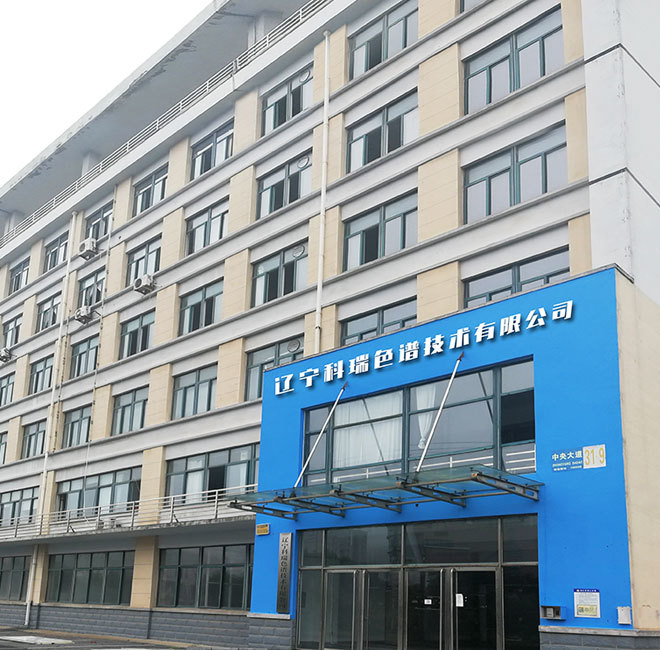
Technological Accumulation
The company boasts a 25-year legacy of technological expertise, rooted in the National Chromatography Center of the Dalian Institute of Chemical Physics, Chinese Academy of Sciences. Our core technical team is composed largely of alumni from this prestigious institution, including numerous CAS researchers, who have cultivated a comprehensive and systematic body of knowledge spanning chromatographic theory to engineering application.
Over the years, we have remained steadfastly committed to research on gas chromatography technology and the development and manufacture of related instruments, accumulating profound expertise in industrial applications, system integration, method development, and engineering implementation. Taking mixed-gas analysis as an example, the pivotal center-cutting technique and multi-column coupling technology were first pioneered in China by the Dalian Institute of Chemical Physics; today, these technologies have been continuously refined and advanced at CoreTech, becoming our core capability for addressing the challenging task of separating complex samples.
Korei is not only a software and high-tech enterprise but also a member of the China Industrial Gases Standardization Technical Committee, the China Instrument and Meter Industry Association, and the China Industrial Gases Committee. The company has actively participated in the development of the national standard for laboratory gas chromatographs as well as the national standard for the determination of triaromatic hydrocarbon content in crude benzole. Korei is also a key participant in the “National Key R&D Program—High-Reliability Industrial Online Chromatography Instrument Project” and serves as the principal undertaking unit for the national project on “Rapid On-Line Natural Gas Analysis.” The company holds dozens of patents and software copyrights. Its proprietary technologies span critical areas such as core hardware, control software, intelligent temperature control, precise sample injection, and trace detection, thereby ensuring the stability and accuracy of analytical results in complex application scenarios.
Research and Innovation
From technological inheritance to independent innovation, Core has consistently focused on specific industry challenges, leveraging key breakthroughs to drive generational product upgrades.
Breakthroughs in Trace Analysis (2002–2005)
The company has launched the GS-2010A online trace hydrocarbon analyzer, which features a high-sensitivity FID detector and an automated sampling and injection system, reducing the detection limit for acetylene to 0.02 ppm. This breakthrough has ended the long-standing reliance on imported instruments of this type and provides an effective means of ensuring the safety and explosion-proof operation of the main condenser in air separation units. Concurrently, the GS-2010B enriched trace hydrocarbon analyzer, utilizing concentration-based sampling technology, further lowers the detection limit for acetylene to 0.001 ppm. In 2005, this project received non-repayable funding under Dalian City’s Three Major Science and Technology Programs.
Optimization of the detector’s core technology
The company has conducted specialized optimization on the key components of its FPD flame photometric detector, significantly reducing the likelihood of flame extinction and quenching while achieving a detection limit as low as 0.02 ppm. In 2007, the company initiated independent research and development of a PDHID detector-based gas chromatograph. The PDHID is a high-sensitivity, general-purpose detector that does not contain any radioactive sources. Based on this technology, the GS-2010H high-purity gas analyzer has been launched, enabling trace-level analysis of a wide range of high-purity gases, including high-purity hydrogen, oxygen, nitrogen, argon, helium, and carbon dioxide. Moreover, with the exception of oxygen in high-purity argon, oxygen and argon can be effectively separated in all other high-purity gases, making this instrument particularly suitable for manufacturers of high-purity gases.
Dedicated Analytics System Development
In 2014, the GS-2010Z zirconia detector chromatograph was put into operation, specializing in the detection of oxygen, carbon monoxide, and carbon dioxide in inert gases such as food-grade nitrogen and high-purity nitrogen, and has since been recognized by several large domestic dairy companies.
The GS-2010 series gas analyzers for coal gas, liquefied petroleum gas, refinery gas, natural gas, and other gaseous fuels utilize a TCD detector to achieve comprehensive component analysis from a single injection, and have established extensive application records in industries such as coal chemical engineering and LNG.
Online Monitoring and System Integration (2019–present)
The GS-2010 online gas chromatograph enables continuous monitoring of various process gas compositions, including real-time on-line measurement of total hydrocarbons and acetylene in liquid oxygen; the product has already been exported overseas. The online natural gas chromatograph has also successfully entered the market. Furthermore, the company’s online blast furnace gas chromatography analysis system covers the entire process—from sampling and subsequent sample purification to real-time, continuous on-line measurement—helping customers maintain real-time visibility into blast furnace operating conditions and production safety, thereby enabling data-driven production control and optimization.
In the same year, leveraging the GS-2010 universal chromatography system and pairing it with a Canadian-imported enhanced plasma discharge detector (EPD/SePdd), the company expanded its high-purity gas analysis capabilities to include a wide range of impurities such as hydrogen, oxygen, nitrogen, methane, carbon monoxide, carbon dioxide, and sulfur compounds, thereby upgrading its application development capabilities.
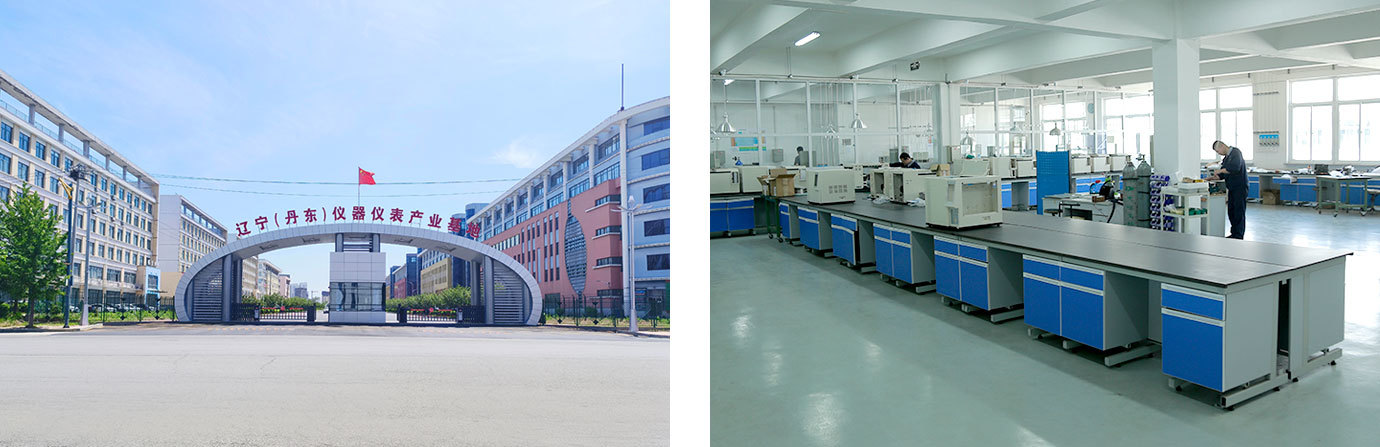
Products and Services
Centered on customers’ needs throughout the entire lifecycle of gas chromatography analysis, the company has established a diversified service system, which primarily includes:
Customized Technical Solution Development
Instrument manufacturing, leasing, and sales
Instrument Customization and Upgrade
Professional Compliance Certification Services
Analysis of Team Building and Specialized Training
One-stop laboratory/clinical lab setup
One-Stop Construction of Production Process Control Systems
Instrument Maintenance and Laboratory Operations Outsourcing
Data Asset Management and Value-Added Services
Design and Construction of Sample Pre-treatment System
Full-range supply of accessories and consumables
We are equipped to help clients establish comprehensive testing and production analytics systems, while also providing expert support for specific challenges—moving beyond simply “selling equipment” to “solving problems.”
Manufacturing and Quality
The company is located in the Liaoning Province Instrument and Meter Industry Park, boasting a 5,000-square-meter standardized production facility and a mature, in-house manufacturing system. We design and produce our instruments to industrial-grade standards, delivering gas chromatography systems that can operate reliably for more than 10 years with an average annual mean time between failures of at least 15,000 hours, thereby helping customers reduce maintenance costs and total cost of ownership.
Service and Response
We adhere to the service philosophy of “professional rigor and end-to-end support.” Prior to sale, our team of engineers conducts an in-depth analysis of the customer’s application scenarios to develop precise technical solutions; after sale, a dedicated team of professional engineers provides rapid response and comprehensive lifecycle support, including installation and commissioning, maintenance and repair, as well as calibration and routine upkeep.
To better serve regional customers, the company established a Xi’an office in 2024 to strengthen its localized service capabilities in the western market and provide more convenient support to clients in industries such as chemicals, gases, and electronic specialty gases.
Who do we serve?
We primarily serve:
Chemical manufacturing enterprise
Industrial Gases and Specialty Gases Company
Electronic semiconductor and electronic specialty gas companies
Third-party testing agency
Research Institutes and Corporate Laboratories
Production Quality Control and Process Control Department
What problem are we solving?
We focus on helping clients resolve:
Analysis of complex components and special samples is challenging.
Trace impurity detection and gas purity control demand high standards.
Insufficient method development capabilities make it difficult to implement testing protocols.
Laboratory construction, compliant operations, and team building are highly challenging.
The construction of online analytical systems and sample pretreatment systems is complex.
Insufficient instrument stability, high maintenance costs, and heavy O&M pressure.
Data is fragmented, making it difficult to derive decision-making value.
Online Inquiry
Learn more about our products
Online Inquiry
Learn more about our products
Contact Us
After-sales service phone number:
+86 13904950125 +86 13364112972
Technical consultant contact information:
Instrument sales contact:
Wang Wei: +86 13904950160 (Shaanxi, Sichuan, Gansu, Ningxia, Qinghai, Yunnan, Chongqing, Guizhou, Guangxi)
(Shanxi, Inner Mongolia, Liaoning, Jilin, Heilongjiang,Hebei)
Yu Zixuan: +86 13904952011 (Xinjiang)
Huang Wei: +86 13842501881 (Zhejiang, Shanghai, Jiangsu, Fujian, Jiangxi, Guangdong,Shandong)
Yuan Xulin: +86 13704956101 (Shaanxi, Sichuan, Gansu, Ningxia, Qinghai, Yunnan, Chongqing, Guizhou, Guangxi)
National consumables sales Manager Liu:
Add:1F-6F,East SideBuilding 9Instrument Indus stry Baselingang Industrial Park Dandong,Liaon ning.

After Sales
Official account